
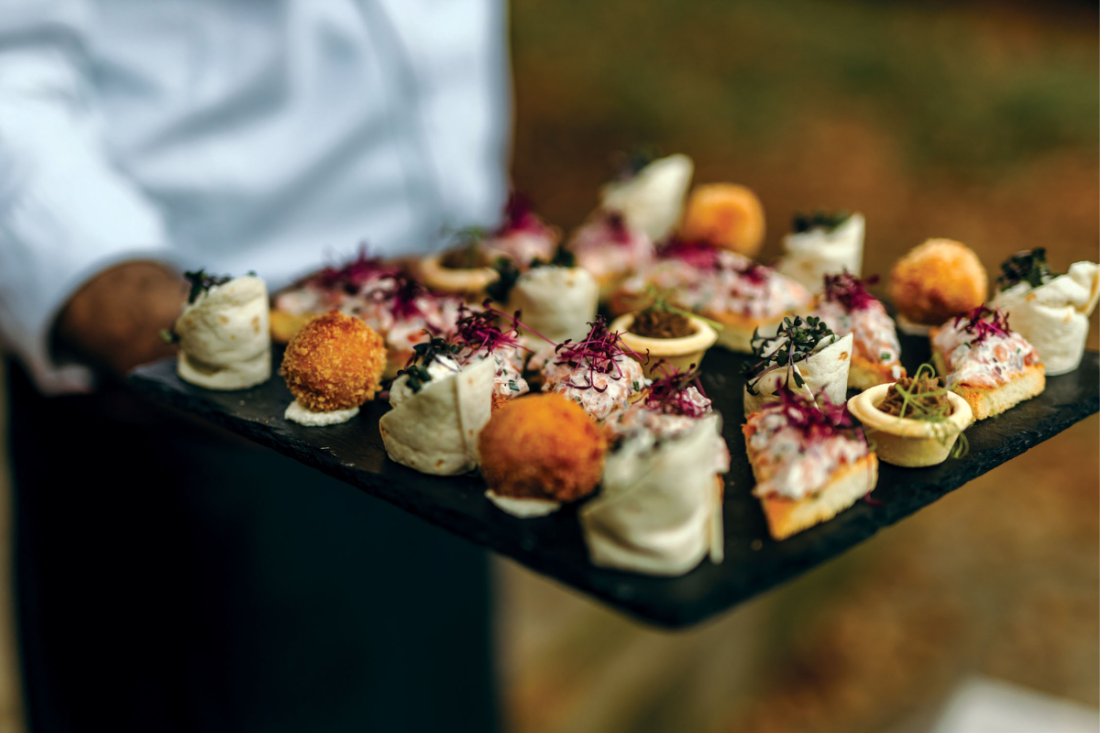
In the past, an RSVP card for a wedding included lines for accepting or declining the invitation and selecting an entrée—usually fish or beef, with no elaboration. Slowly, a vegetarian option crept onto the card.
Things have changed. Now couples are leaving space for allergies or dietary restrictions—and guests are responding.
“It comes up more and more these days,” agrees Morgan Minner, who oversees special events for Ashby Hospitality Group, which owns Cantwell’s Tavern in Odessa. “We’re seeing a lot more vegans and allergies. I would say that out of every 100 guests, we need anywhere from two to 10 special meals.”
Accommodating dietary preferences isn’t just a courtesy—it’s a safety concern. According to FARE (Food Allergy Research & Education), 33 million Americans have a food allergy, and more than half of those adults have experienced a severe reaction. Allergies to nuts and shellfish, for instance, can cause anaphylaxis, which can be fatal.
Some guests avoid certain foods for religious or cultural reasons. Kosher diners, for instance, will not eat meat and dairy on the same plate, and seafood must have scales and fins. In Islam, halal foods are acceptable, while pork and pork byproducts are forbidden.
Meanwhile, 4% of Americans—about 13.4 million people—identify as vegan, according to data-gathering platform Statista. That’s an increase of more than 3,000% over the past 15 years, reports Ipsos, which tracks retail trends.
RSVP details are especially valuable for seated dinners, when each course arrives simultaneously. Michael “Sherm” Porter of Sherm’s Catering in Bellefonte requests the seating chart so that guests receive the correct meal. Colored place cards can help too.
Still, savvy caterers like Sherm’s and Caffé Gelato in Newark pack extra vegan meals just in case. “There’s always a hiccup,” Porter notes. “And if you haven’t brought a vegan meal, that’s a hard hiccup to fix. You can’t magically make food appear.”
With a buffet, couples can easily meet diverse needs. For multiple reasons, Sherm’s servers handle the food. “When people ask what’s in a dish, they can provide a clear answer,” Porter explains. Servers also keep the line moving and manage portion control.
Ryan German of Caffé Gelato suggests go-to dishes for most diets, including a mixed salad—with a dressing that’s not made with a nut-based oil—and grilled asparagus with olive oil and lemon.
Catering to special diets includes beverages too. Minner once handled a wedding that served sparkling cider. Mocktails have become more elaborate, though she and Porter agree that most couples still serve alcohol.
Don’t be surprised if a tipsy guest forgets about a gluten aversion when the cake is presented. Porter has seen it all too often. Regardless, the effort to accommodate family and friends reflects the couple’s thoughtfulness—and reminds everyone that love, like a great menu, is best when it’s inclusive.